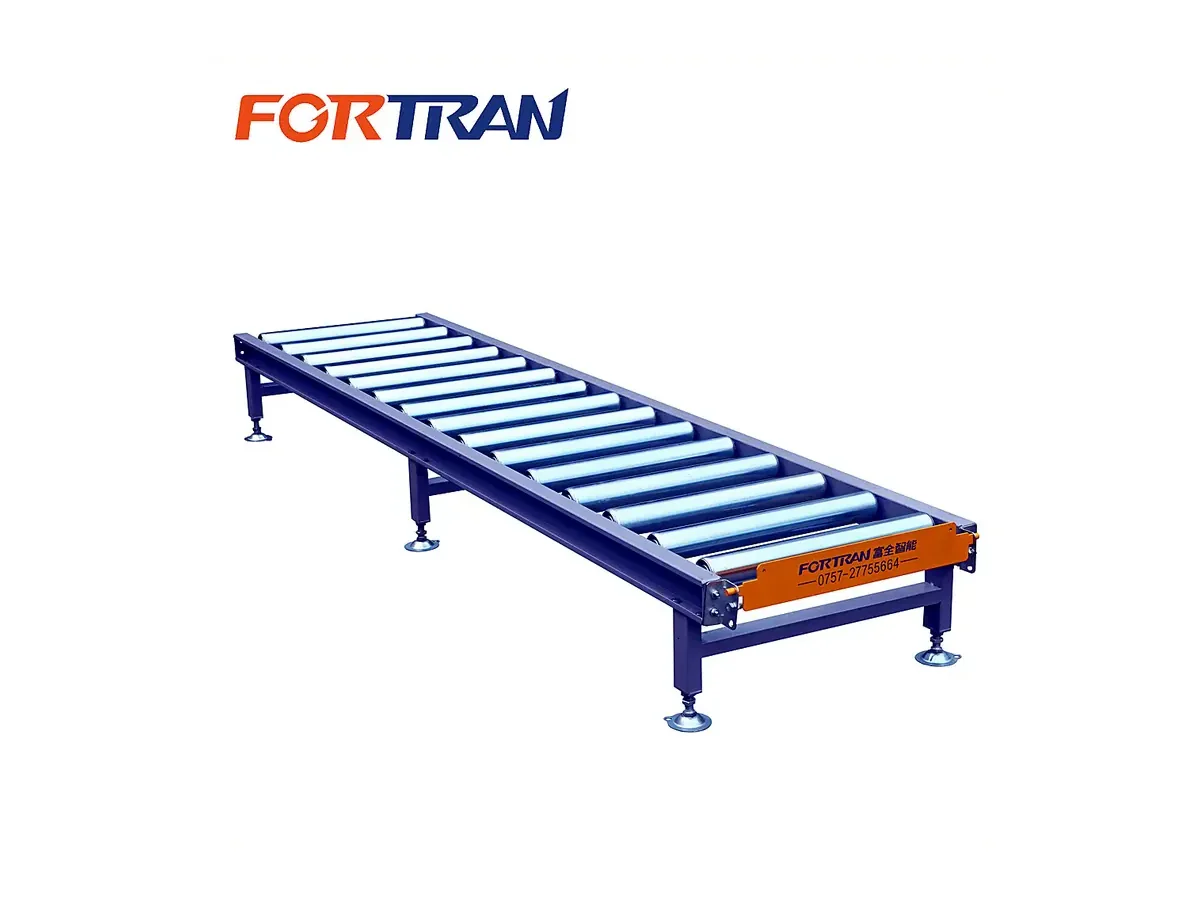
Choosing an unpowered panel roller conveyor
An unpowered roller conveyor, also called a manual roller conveyor, supports flat panels during transfer between furniture production workstations. A gravity roller conveyor has no powered drive: on a level installation, panels need an external push. Gravity movement requires an appropriate slope and a controlled handling arrangement.
Choose the layout around the workpiece bottom surface, dimensions and weight. A low-level or floor roller conveyor describes the installation height; it does not, by itself, identify whether the rollers are powered. Confirm the drive arrangement and transfer method when connecting equipment.
Panel conveyor buying questions
Can a gravity roller conveyor replace a powered conveyor?
Only where the proposed handling process allows manual assistance or controlled gravity movement. If panels need automatic movement on a level line, discuss a powered roller conveyor and the required controls.
What information is needed to select the conveyor?
Provide panel length, width, weight and bottom surface, transfer distance, working height and a workstation layout. Explain whether individual panels, panel stacks or packaged products will be handled; the support arrangement needs to be checked for that load.
Does the listed load apply to every conveyor configuration?
The product data lists 600/800 kg per metre. Confirm which version applies and how the load is distributed. This figure is not the total capacity of an arbitrary assembled line.
Equipment for adjacent workstations
Discuss your panel conveyor requirements